
Features & Quick Stats
Key Features
AI for Insurance
- Ask questions about agency and book-of-business data using natural language
- Analyze policies, submissions, loss runs, quotes, and other insurance documents
- Coverage, limit, exclusion, and premium analysis
- Document and quote comparison
- Answers grounded in agency data and source documents
- Client-ready output generation
Workflow Automation
- Renewal preparation
- Submission intake and preparation
- Policy and quote comparison
- Loss run summarization and analysis
- Coverage analysis
- Proposal generation
- ACORD form preparation
- Certificate workflows
- AMS/CRM data updates
Data & Analytics
- Connect and consolidate data across AMS, CRM, documents, and other agency systems
- Data cleaning, standardization, and enrichment
- Book-of-business analytics
- Carrier and market analysis
- Cross-sell and growth opportunity identification
- Retention and performance analytics
- Producer and team performance insights
Core Business
Helping insurance agencies with data and workflows
How ennablAI Helps Independent Agents & Brokers
ennablAI brings agency data, documents, analytics, and insurance workflows together in one AI-powered workspace. It connects with existing agency systems rather than replacing them, giving teams a way to work with information already stored across their AMS, CRM, documents, email, and other systems.
Agency teams can use ennablAI to analyze policies and coverage, compare documents and carrier quotes, summarize loss runs, prepare renewals and submissions, generate proposals, research prospects, identify cross-sell opportunities, and ask questions about their book of business using natural language. Answers based on documents include citations back to the underlying source, while workflow outputs can be turned into client-ready reports and other deliverables.
Behind the AI experience, ennabl can extract, clean, standardize, enrich, and consolidate information from agency systems. This gives agencies a more consistent data foundation for reporting, carrier strategy, growth analysis, retention, producer performance, and AI-powered workflows.
AI Capabilities
ennablAI is purpose-built for insurance and combines large language models with agency data and insurance-specific workflows. Users can ask questions about their book of business, analyze and compare insurance documents, extract structured information, summarize policies and loss runs, generate client-ready outputs, and complete guided workflows for renewals, submissions, prospecting, and other agency processes. Responses derived from documents provide source citations so users can verify the underlying information.
Certifications & Awards
Important company certifications:
- SOC 2 Type II
- Role-based access controls
- Data encryption in transit and at rest
- SSO support
- Audit logs and administrative controls
Relevant industry awards or distinctions: Used by 50% of the top 100 brokers in the USA, plus hundreds of smaller brokers.
Subscriber Deals
15% off the first year fees
Catalyit Team Review
Helping agencies turn disconnected book data into decisions and work employees can actually use
Updated: September 2026
What we like:
- Starts by addressing the underlying data problem: ennablAI can bring information together from AMS, CRM, documents, and other sources, then standardize and correct it before agencies try to report or automate against it.
- Makes book-of-business information easier to use: Leadership can analyze retention, premium, carrier performance, account trends, cross-sell opportunities, and other business questions without relying entirely on static reports or manual data work.
- Connects agency intelligence with everyday insurance workflows: ennablAI can work across connected agency data and insurance documents to support renewals, submissions, policy and quote comparisons, coverage analysis, proposals, prospecting, and related account work.
- Source-level citations make AI-assisted work easier to verify: Employees can trace information extracted from documents back to the supporting page rather than relying on an answer without knowing where it came from.
- Designed to work across existing agency systems: ennablAI doesn't require the agency to replace its AMS or CRM. Its value comes from connecting and making better use of data and documents already spread across those environments.
Things to consider:
- Data quality still deserves attention. ennablAI can standardize and correct data, but agencies should understand the condition of their underlying AMS, CRM, and document information and establish ownership for improving it over time.
- Understand which workflows matter most to your agency. ennablAI spans data, analytics, document intelligence, and insurance workflows. Agencies should evaluate the specific use cases they expect employees to perform, the systems and data required to support them, and how those workflows fit into existing processes.
- Human review remains necessary for insurance decisions. Policy comparisons, coverage analysis, appetite research, and other AI-assisted outputs should support licensed employees rather than become the final authority.
- Start with specific business questions and workflows. The breadth of ennablAI can be a strength, but agencies will get more value by identifying the decisions and recurring work they want to improve first, then determining which data, documents, and integrations are needed to support them.
Summary
Most agencies don't have a shortage of data. They have a shortage of usable data.
Client, policy, premium, carrier, producer, claims, and activity information may be spread across the AMS, CRM, spreadsheets, documents, acquired databases, and other systems. Even when leadership can access that information, inconsistent names, duplicates, incomplete records, and different data structures can make it difficult to trust.
ennablAI is designed to make that information more usable. ennablAI's underlying data capabilities bring information together, standardize and enrich it, and create a more consistent foundation that can support analytics, AI, and insurance workflows.
Why should agencies care? Better dashboards are useful, but the larger opportunity is connecting agency intelligence with the work employees perform. The same book data that helps leadership understand retention or carrier performance can also provide context for renewal preparation, account analysis, prospecting, and other workflows.
What stood out during our review is that ennablAI isn't simply a general-purpose chatbot layered onto insurance. Its AI capabilities sit on top of ennablAI's data foundation and can work with the agency's actual accounts, policies, carriers, and documents.
Key Features:
- AMS and CRM data aggregation
- Data cleansing, standardization, and enrichment
- Book-of-business analytics
- Custom dashboards and reporting
- Policy and document analysis
- Renewal and submission workflows
- Policy, quote, coverage, and document comparison
- Insurance-specific AI grounded in agency data
- Loss run analysis and summarization
- Prospecting and growth analysis
- Natural-language interaction with agency data and documents
- Source citations for document-based AI responses
Best fit for:
- Mid-sized and larger agencies or brokerages with data spread across multiple systems
- Acquisitive organizations trying to create consistent reporting and visibility across multiple books
- Agency leaders struggling to get reliable answers from AMS and CRM data
- Agencies wanting connected book data and insurance documents available for renewal, submission, comparison, proposal, prospecting, and account workflows
- Organizations wanting an insurance-specific AI environment that can work with their own agency data and documents rather than a standalone general-purpose AI tool
May not be ideal for:
- Small agencies whose existing AMS reporting already answers most business questions
- Organizations without enough data or workflow complexity to justify a separate data and intelligence layer
- Agencies looking only for a simple standalone document-chat tool
- Teams expecting technology to permanently correct poor data without ongoing ownership and data-management discipline
Deeper Dive
The Problem Being Solved: Agency data becomes fragmented quickly.
An AMS may contain the core policy record. Sales information lives in the CRM. Acquisitions introduce additional systems and naming conventions. Important details remain trapped in PDFs and policy documents. Leadership exports information into spreadsheets because the standard reports don't answer the question being asked.
The result isn't simply inconvenient reporting.
Poorly connected data makes it harder to understand the book, compare performance, identify opportunities, automate workflows, and give employees reliable context.
ennablAI's data foundation is designed to address that fragmentation so analytics, AI, and workflows can operate from more consistent information.
Information from multiple systems can be brought into a standardized structure, with errors, duplicates, and inconsistencies identified and corrected. That creates a more consistent view of accounts, carriers, policies, producers, and other agency information.
Once the foundation is usable, the agency can do considerably more with it.
Why It Matters to Agencies: Agency leaders regularly ask questions that sound simple but can be surprisingly difficult to answer.
Where are we losing business? Which carriers are growing? Which producers have cross-sell opportunities? What does our book look like by industry or geography? Which accounts deserve attention before renewal?
Answering those questions becomes difficult when the underlying information is fragmented or inconsistent.
ennablAI gives leadership a way to query and analyze connected book data while also creating dashboards and reporting around recurring business questions.
ennablAI extends that connected intelligence into the work employees perform.
Instead of using agency data only for management reporting, producers and account teams can use connected information and documents to prepare renewals and submissions, compare policies and quotes, summarize loss runs, investigate coverage, research accounts, identify opportunities, and generate client-ready outputs.
We think that connection matters.
The more useful future for agency data isn't simply producing better dashboards for leadership. It's making reliable information available at the moment an employee needs to make a decision or complete work.
What Stood Out to Us: What stood out during our review is how ennablAI's data foundation supports a broader AI-powered work environment for insurance.
ennablAI can analyze policies, submissions, loss runs, and connected book data. It can extract coverage information, limits, exclusions, schedules, and premium trends; compare documents; prepare renewal information; assemble submissions; generate proposals; and answer questions about the agency's book.
Importantly, information pulled from documents can be traced back to its source. We like that approach because employees reviewing coverage or policy information need a practical way to verify what the technology found.
Team capabilities also allow agencies to share knowledge, templates, workflows, and account context rather than having every employee build an individual collection of AI prompts.
We would still resist evaluating ennablAI simply because it has AI.
The stronger differentiation is the sequence: connect the agency's data, improve its quality, make it easier to analyze, and then use that same foundation to support AI-powered insurance workflows.
For us, that's ennablAI's opportunity: turning agency data from something leadership periodically reports on into something the entire organization can use to understand the book and get work done.
Final Thoughts
We came away seeing ennablAI's data foundation as more important than any individual dashboard or AI capability. Agencies can't make consistently better decisions—or reliably automate work—if the information underneath those decisions is fragmented and difficult to trust.
ennablAI makes that foundation more actionable. Connected agency data can support not only leadership analytics but also document analysis, renewals, submissions, comparisons, proposals, prospecting, and everyday questions from producers and account teams.
For an agency principal or operations leader, ennablAI is worth further evaluation if important business questions routinely require spreadsheets, manual exports, or several people reconciling different answers, or if employees spend significant time gathering and interpreting information before they can complete recurring insurance work. We would begin with five questions leadership currently struggles to answer and several document-heavy workflows employees perform repeatedly. If ennablAI can improve both, its value extends well beyond reporting.
* Unbiased review based upon information and insights available at the time of publication.
ennablAI Videos
ennablAI Live Demo
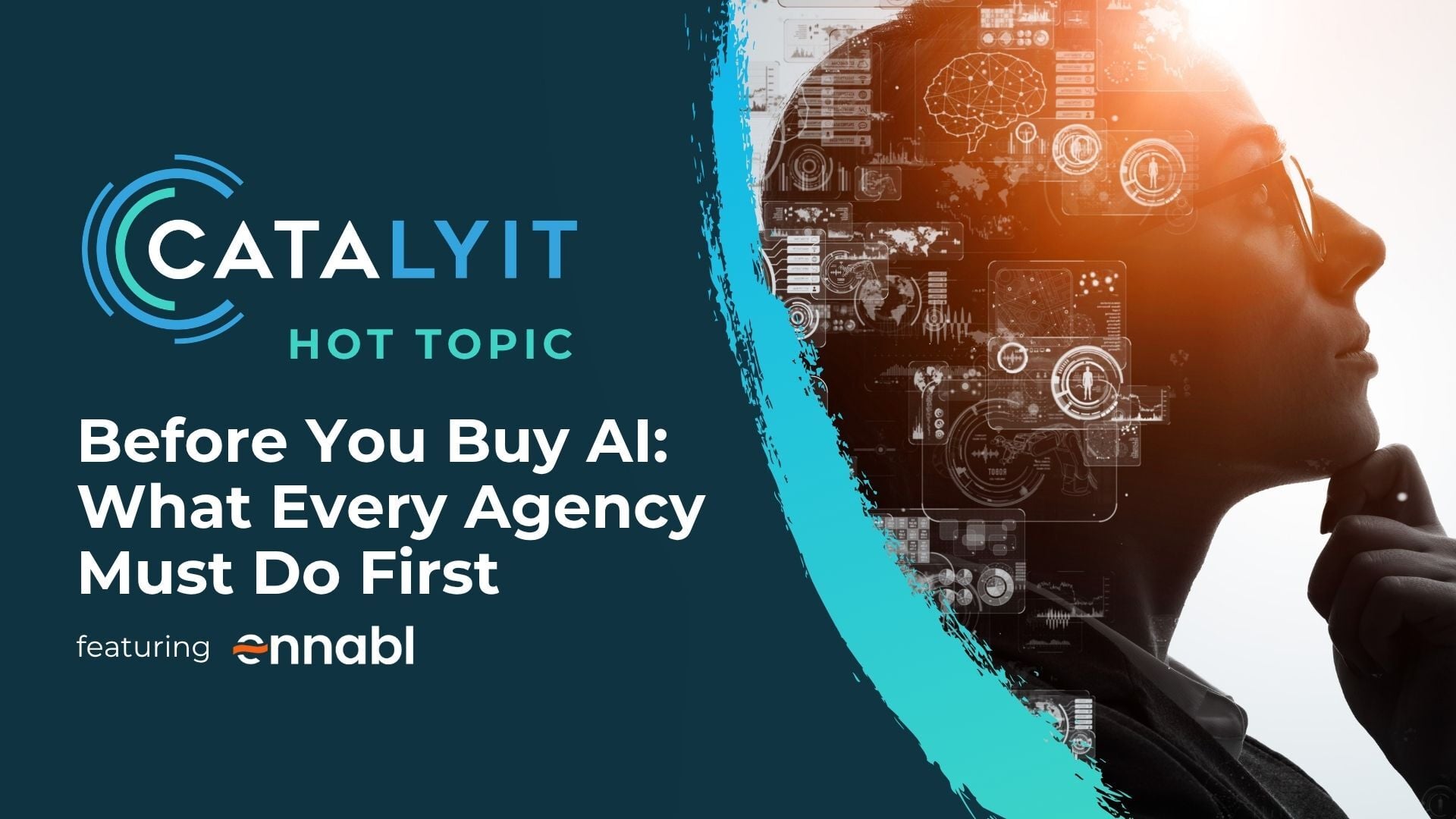
Before You Buy AI: What Every Agency Must Do First
ennablAI Resources