

Features & Quick Stats
Key Features
- Hire: Find, evaluate, and hire top tier talent with our application tracking system.
- Assess: Determine your existing staff’s positional compatibility and current insurance expertise.
- Train: Enroll new and experienced staff in a variety of comprehensive insurance and career development courses – you can even build your own!
- Support: Ask Ellie! The insurance industry’s favorite elephant is your staff’s quick access resource library to their daily insurance questions.
Core Business
How Train Helps Independent Agents & Brokers
AI Capabilities
Partnerships
Certifications & Awards
Subscriber Deals
Catalyit Team Review
Helping agencies build insurance knowledge without making their best employees the full-time trainers
Updated: August 2026
What we like:
- Practical, agency-focused training: Covers real tasks like ACORD forms, submissions, loss runs, comparative rating, proposals, policy checking, and policy changes—not just insurance theory.
- Repeatable new-hire process: Structured paths for commercial lines, personal lines, employee benefits, and professional lines mean agencies don't rebuild onboarding each time.
- Less strain on senior staff: New hires build foundational knowledge independently, freeing account managers and producers to focus on agency and client work.
- Customizable with agency-specific content: Custom courses let agencies layer their own procedures, workflows, and expectations onto Total CSR's core education.
-
Support beyond onboarding: Assessments, advanced training, professional development, continuing education, LicenseTRAQ, and Ask Ellie support ongoing employee growth.
Things to consider:
- Doesn't replace agency-specific training: Employees still need to learn your AMS, carriers, workflows, service standards, authority levels, documentation practices, and org expectations.
- Requires management involvement: Agencies need to define who assigns learning paths, tracks progress, coaches employees, and signs off on readiness to work independently.
- Completion ≠ job readiness: Managers should pair training results with observation, practice, quality review, and demonstrated performance before expanding responsibilities.
- Value scales with hiring volume: Agencies hiring or developing employees infrequently, especially those with a strong internal program already, may see less benefit.
Summary
Hiring someone into an insurance agency creates a second staffing problem: someone else has to train them.
Often that responsibility falls to an experienced account manager, producer, or department leader. The new employee learns, but one of the agency's most valuable employees spends weeks answering foundational questions, explaining coverage, reviewing forms, and walking through routine tasks.
Total CSR is designed to give agencies a more structured way to build that foundation. Its training combines insurance knowledge with practical agency work across personal lines, commercial lines, employee benefits, professional lines, and professional development.
Why should agencies care? Hiring faster doesn't help much if every new employee creates a significant productivity drain on the rest of the team. A repeatable training program can reduce the amount of foundational instruction that has to be recreated every time someone joins the agency.
What stood out during our review is the emphasis on practical desk work. Total CSR isn't simply teaching what a commercial auto policy is. Its programs can teach employees how to work with ACORD forms, analyze loss runs, compile submissions, compare quotes, prepare proposals, process policy changes, and perform other activities they will encounter inside an agency.
Key Features:
- Role-specific new-hire training
- Personal, commercial, benefits, and professional-lines education
- Advanced insurance training
- ACORD form and practical workflow instruction
- Employee and candidate assessments
- Custom agency-created courses
- Continuing education and license tracking
-
Ask Ellie insurance knowledge assistant
Best fit for:
- Agencies regularly hiring employees who are new to insurance
- Growing agencies where senior employees spend significant time training new hires
- Multi-location agencies wanting a more consistent training standard across teams
- Agencies willing to hire for aptitude and culture rather than requiring extensive insurance experience
- Organizations wanting structured development for both new and existing employees
May not be ideal for:
- Agencies that hire infrequently and already have an effective internal training program
- Organizations expecting online training to replace coaching, supervision, and hands-on practice
- Agencies unwilling to supplement insurance education with their own systems, carrier, and workflow training
- Teams that don't have management capacity to monitor progress and reinforce what employees learn
Deeper Dive
The Problem Being Solved: Independent agencies need knowledgeable employees, but developing that knowledge is expensive.
New-to-industry hires need to understand insurance terminology, coverage, forms, workflows, carrier interactions, and client-service expectations before they can independently manage meaningful work.
Traditionally, much of that education happens through shadowing and one-on-one instruction.
There is value in learning from experienced employees, but using senior staff as the primary training system creates a capacity problem. Training quality can also vary depending on who happens to teach the new hire.
Total CSR provides a structured foundation that employees can work through independently.
The agency can then focus its internal training on what is actually unique to the organization: systems, carriers, procedures, culture, workflows, and client expectations.
That division of labor makes sense to us. Let a repeatable platform teach repeatable insurance fundamentals and let agency experts spend their training time on the knowledge only they can provide.
Why It Matters to Agencies: Talent remains one of the most important constraints on agency growth.
Agencies may find capable people outside the insurance industry, but hiring for potential only works if there is a realistic way to develop the insurance knowledge they need.
Structured training can broaden that talent pool.
Instead of requiring every candidate to arrive with years of agency experience, an organization can evaluate aptitude and fit, then provide a defined path for developing insurance knowledge and practical skills.
We also see value beyond new hires. Existing employees may have knowledge gaps, move from personal to commercial lines, step into management, or need development in areas they haven't previously handled.
Assessments can help identify some of those gaps, while advanced and professional-development programs provide a more structured way to address them.
The business case isn't simply completing courses. It's shortening the distance between hiring someone and confidently giving that person meaningful responsibility.
What Stood Out to Us: What stood out during our review is how specific the training can become to actual agency responsibilities.
For example, Total CSR's commercial-lines new-hire program includes work around supplemental applications, ACORD forms, loss runs, and submissions. Personal-lines training includes comparative rating, replacement-cost information, CLUE reports, proposals, binding, policy checking, and policy-change requests.
Those are recognizable agency tasks—not generic insurance education.
We also like that agencies aren't limited to Total CSR's content. Custom courses allow leadership to add internal procedures and knowledge, creating the opportunity for a more complete onboarding path within the same environment.
LicenseTRAQ and continuing education extend the platform into ongoing employee administration, while Ask Ellie gives employees another resource for insurance questions after formal training ends. We see the AI assistant as a supporting feature rather than the reason to evaluate Total CSR.
For us, the differentiation is straightforward: Total CSR is designed to teach both insurance knowledge and the practical work employees need to perform at an independent agency.
Final Thoughts
We came away seeing Total CSR as a way to make employee development more repeatable. Agencies will always need experienced people to coach newer employees, but those experienced employees shouldn't have to personally recreate the same foundational insurance curriculum for every hire.
The practical nature of the coursework is what makes the platform particularly relevant to independent agencies. Coverage knowledge matters, but employees ultimately need to know how to use that knowledge while completing forms, building submissions, comparing quotes, servicing policies, and communicating with clients.
For an agency principal, Total CSR is worth further evaluation if hiring creates a recurring training bottleneck or if the agency wants to expand its recruiting pool beyond experienced insurance professionals. We would compare your current onboarding process with Total CSR's training paths and identify which hours of senior-employee instruction could be replaced—not which human coaching should disappear. If the platform can handle the repeatable education while your experienced employees focus on agency-specific coaching, that's where we see the strongest value.
* Unbiased review based upon information and insights available at the time of publication.
Product Reviews
Train Videos
Invisible Friction: Find Waste, Fix Handoffs, Improve Turnaround
Total CSR - RETAIN - Demo
Total CSR Demo
Total CSR Product Spotlight
Train Resources

Total CSR: Your Best Friend in Training & Support

From Knowledge to Intuition: How to Build Expertise Faster

Tailored Training: Why One-Size-Fits-All Fails in Insurance Education

Memory Matters: How to Turn Insurance Knowledge into Lasting Expertise
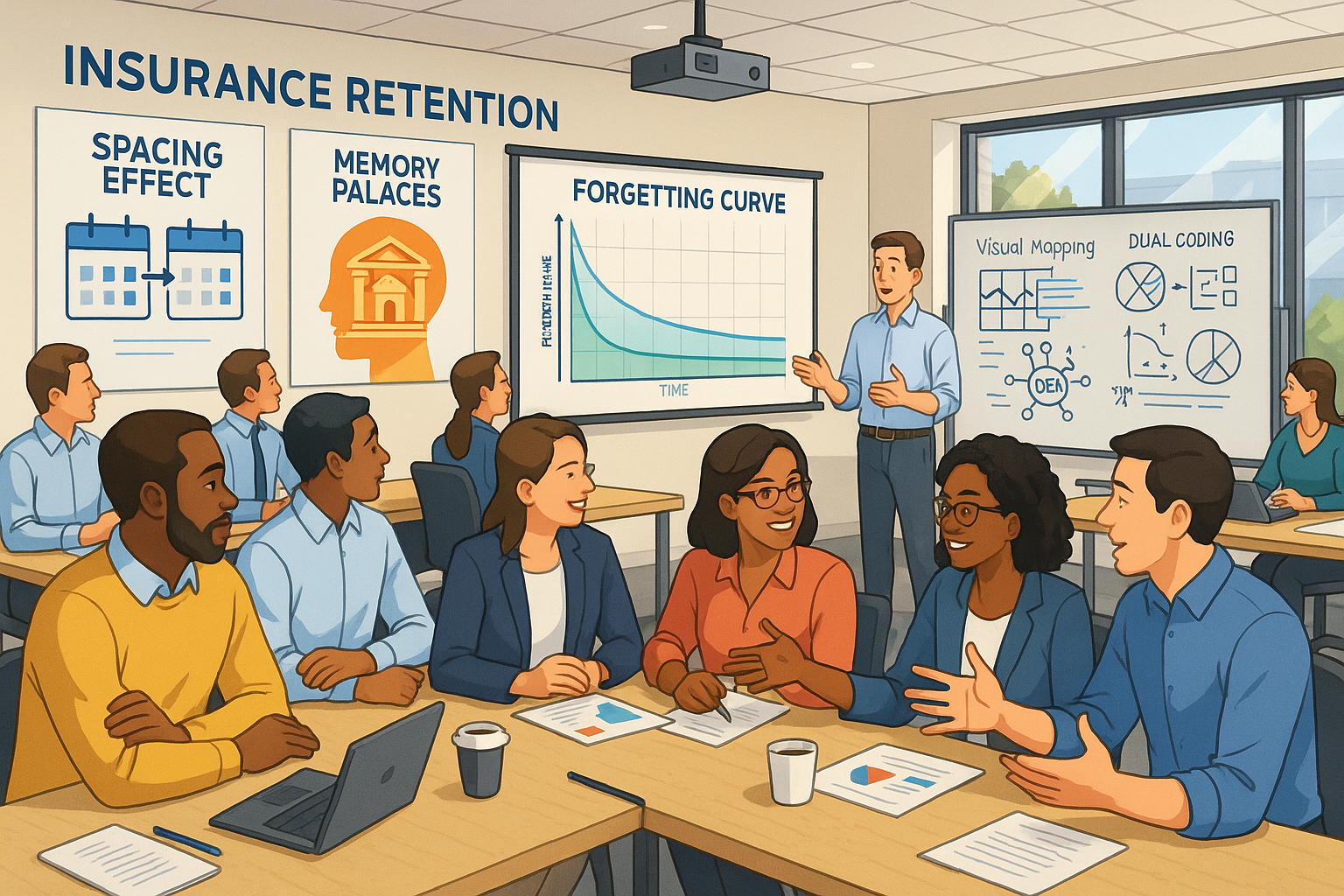
The Future of Learning: Trends Shaping Tomorrow’s Insurance Training