
2. Organize a policy or quote comparison
Lining up two proposals side by side, limits, deductibles, exclusions, endorsements, and figuring out what actually changed, is exactly the kind of careful, repetitive work that eats a CSR's afternoon. AI can turn it into a clean comparison in minutesBonus task: Turn meeting notes into a summary and follow-up
This one didn't make the top three this time, but it's still one of the easiest wins in the agency. I walked through exactly how to do it, step by step, in this article.
The Pattern Behind All Three
Notice what these three tasks have in common. Each one is frequent, each one eats real staff time, and each one ends with a person reviewing the output before it touches a client or a decision. That's not a limitation of AI. That's the whole point.
Automate the task. Don't automate the accountability.
Take the Prompts to the Next Level
A good prompt solves one moment. A workflow solves the problem every time it comes up, without anyone having to remember the steps.
Here's how the move from one to the other actually works. Once you have a prompt that reliably produces something useful, look at what surrounds it.
-
What triggers the task in the first place, a new lead, a renewal date, an approved transcript?
-
What information has to go in before AI can do its part?
-
And once you have the output, what does a person need to check, and what's the real next step, an email that gets sent, a file that gets updated, a meeting that gets scheduled?
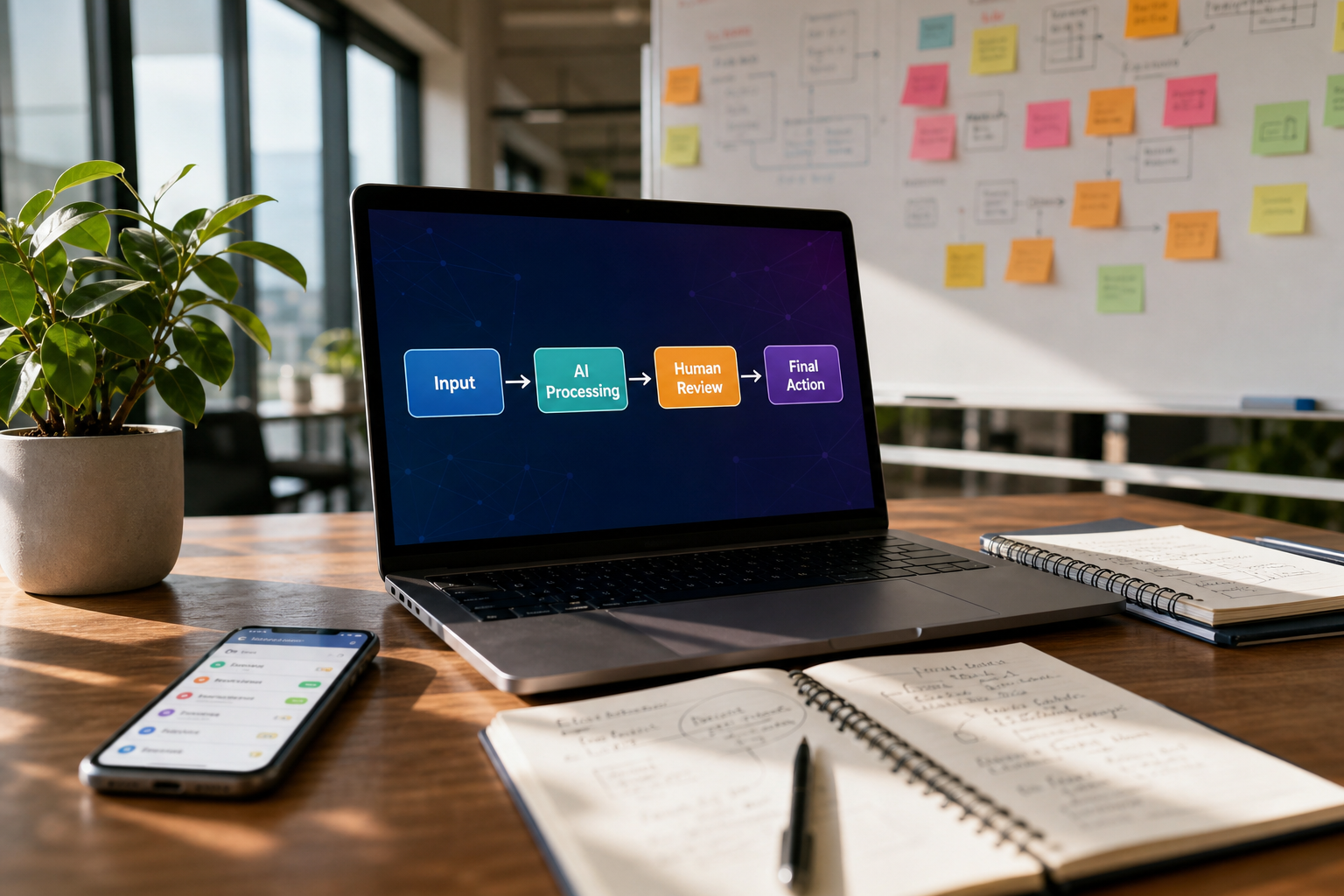
Write those pieces down in order: what starts the task, what goes in, what AI produces, where a human reviews it, and what happens last. That's a workflow. It's still the same prompt you were already using. You've just made the surrounding steps explicit instead of leaving them in one person's head.
Do that once for a task like renewal prep or meeting follow-up, and it stops depending on which employee happens to remember how it's done. Anyone on the team can run it the same way, get consistent results, and know exactly where their judgment is supposed to kick in.

That's also where the real time savings show up. A good prompt saves a few minutes once. A workflow saves those same few minutes every time the task repeats, for everyone who uses it.
That's the shift: stop asking which tool is best, and start asking which piece of your week could use this kind of help. Once you know the task, and once you've mapped the workflow around it, the tool question gets a lot easier to answer.
Build It In the AI Masterclass
We build exactly this kind of thinking, prompt by prompt and workflow by workflow, in the Catalyit AI Masterclass for Independent Insurance Agents, starting October 6.
AI is the tool. You are the advantage.

Advertisement


How Independent Insurance Agents Can Actually Use AI
ChatGPT Isn't an AI Strategy: From Prompts to Workflows

No Comments Yet
Let us know what you think