The Fast Take
You don't always need a developer. You need a vision.
AI has collapsed the gap between "I wish someone would build this" and "I built this on Tuesday afternoon." No dev team, no BI consultant explaining your business back to you, no six-week quote. Just describe what you want, and go.
For most of my career, "building something" meant hiring someone else to build it. A developer for the website. A designer for the graphics. An outside firm for the software. If you had an idea but not a technical team, the idea usually stayed an idea.
That's not true anymore, and it's not hype to say so. It's just what happens when the cost of turning an idea into a working thing drops to almost nothing.
I've felt this firsthand using Claude and ChatGPT. I'll describe something I want, a tool, a workflow, a small piece of software, and instead of a quote and a six-week timeline, I get a working version in an afternoon. Not because I became a developer. Because the gap between having a clear idea and having a working result got a lot smaller.
That's the real shift. Not "AI will change everything." Something narrower and more useful: you no longer need a technical team to test whether your idea works.
What "building" actually means here
Let's be specific, because "everyone's a builder now" can sound like empty inspiration if you don't ground it.
Building doesn't mean writing code. It means taking something that used to live only in your head, a process, a form, a checklist, a tool your agency needs, and turning it into something real enough to use. A spreadsheet that used to take a developer. A client intake form. A simple internal tool that organizes renewal dates. A script that drafts the first pass of a certificate of insurance request.
None of that requires a computer science degree. It requires a clear description of what you want and a willingness to go back and forth with the tool until it's right.
The part that actually matters: a good foundation
Here's where I'll push back on the purely inspirational version of this idea. AI doesn't remove the need for good thinking. It removes the need for a technical team to execute on good thinking. Those are different things, and the difference is where most people either win or waste a lot of time.
Ideation with AI is close to limitless. You can generate ten versions of a client onboarding checklist in ten minutes. That's genuinely useful. But limitless ideation without a foundation just produces limitless mediocre output, fast.
The foundation is context. Before you ask AI to build anything, it helps to be clear on three things:
- What problem you're actually solving. Not "I want an AI tool." What specific, recurring task in your agency costs you time or causes errors?
- What "done" looks like. What does the finished thing need to do, and what can it skip? A tool that drafts a renewal summary doesn't need to also file it with the carrier.
- Who checks the output before it's used. Every one of these builds still needs a human in the loop. A tool you build to draft client emails still needs a person to read the email before it's sent.
Get those three things clear, and the building part gets fast and almost fun. Skip them, and you'll spend your afternoon building something impressive that solves the wrong problem.
An example: a coverage gap checklist, built by you
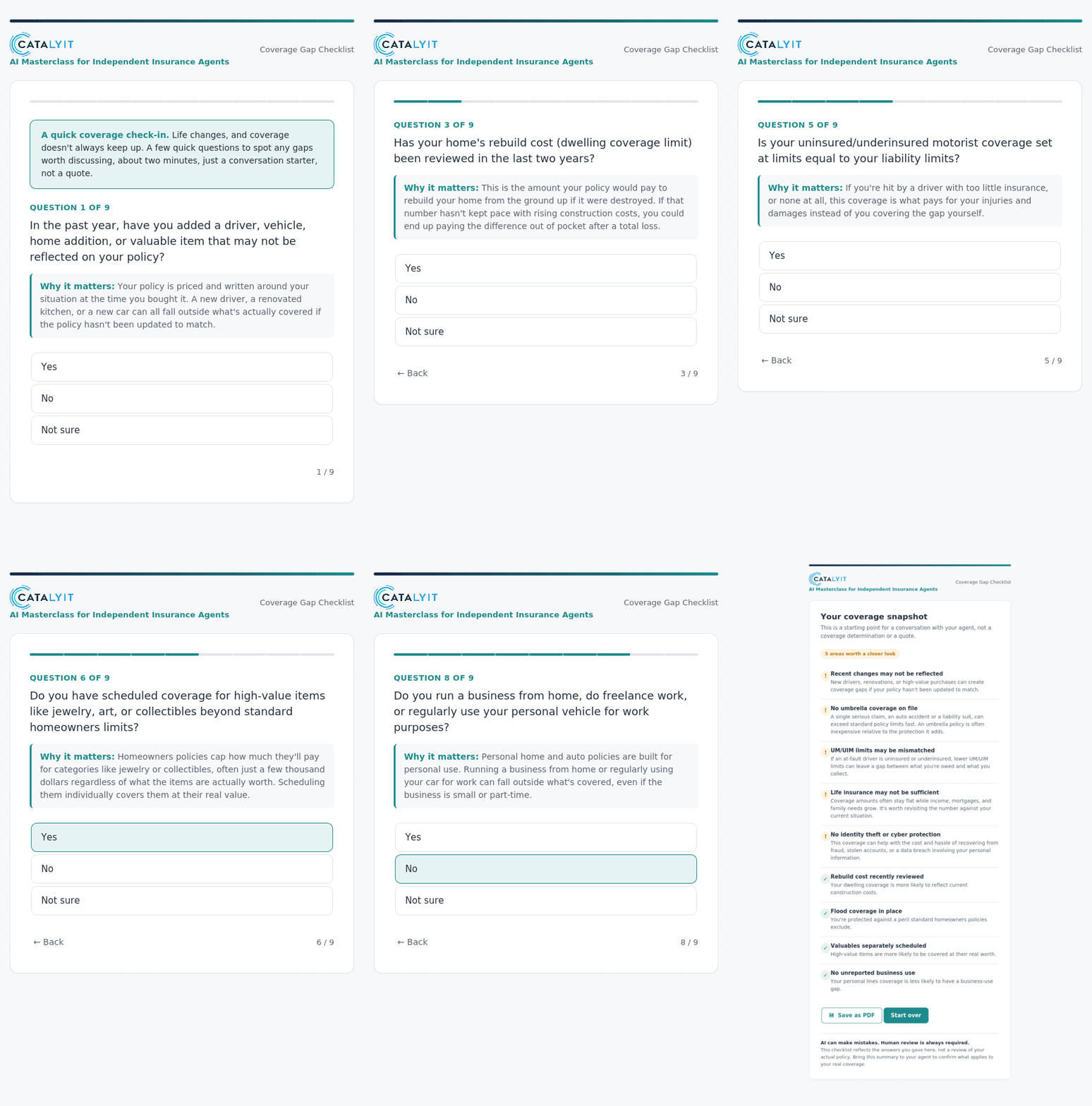
Take a coverage gap checklist. Something a client or prospect fills out (do you have an umbrella policy, is your home's rebuild cost current, do you carry flood coverage) that gives them a simple result: here's where you may be underinsured, let's talk about it.
That used to mean hiring a developer. You'd need someone to build the questions, the logic behind them, and a clean way to show the result, then go back and forth until it actually reflected how you talk to clients. A few hundred dollars and a few weeks, for something fairly simple.
Here's a starter prompt to build one:
Now you can describe it yourself, in your own words, to a tool that builds it. You already know the questions that matter and what a red flag looks like. You're just not writing the code that turns that knowledge into a working tool. You are.
Starter Prompt
Help me build a simple interactive coverage checklist for my insurance agency's website.
Before you build anything, ask me:
- What line(s) of coverage should this focus on (home, auto, umbrella, business, life, etc.)?
- What are 6 to 10 questions that actually reveal a gap for my clients?
- For each question, what should I tell the client about why it matters, in plain language they'd understand without an insurance background?
- What should the result say for each gap, and what should it say when there's no gap?
Then build a simple, self-contained interactive page with:
- A short, friendly intro line before the first question explaining what this is and that it takes about two minutes
- One question at a time, with a progress indicator, not all questions on one long page
- A short "why it matters" note under each question, in plain language, explaining what that coverage actually does
- Yes / No / Not sure as the answer options
- A results screen at the end that summarizes which areas are worth a closer look and which look fine, in plain language, not insurance jargon
- A clear note that this is a starting point for a conversation with me, not a coverage determination or a quote
- A "save as PDF" option on the results screen so clients can keep or print their summary
- My agency's name and colors in a simple header
Keep the tone helpful and reassuring, not alarming. Don't include any binding coverage language, guarantees, or pricing.
A note on data: this tool doesn't need any real client information to build or test it, just general questions and logic. Keep it that way, don't put real client names, policy numbers, or account details into he prompt.
A quick note on data: this one's safe to build without much caution, since it doesn't involve real client information, just general questions and logic. Save the caution about sensitive data for tools that touch real client or policy records.
Notice what that prompt does before it builds anything: it asks questions first. That's the same foundation from earlier in this article, purpose, what "done" looks like, and who checks the output, built directly into the way you talk to the tool.
The guardrail that keeps this useful instead of risky
Being a builder now doesn't mean AI gets to make the decisions. It means you can build the scaffolding faster, the form, the checklist, the first version, while a person still owns every judgment call that follows.
Automate the task. Don't automate the accountability. That line applies just as much to the tools you build as it does to the prompts you run. If a tool you build touches a client, a policy, or a decision, a human reviews it before it goes anywhere. That's not a limitation on this new capability. It's what makes it safe to use in a regulated, relationship-driven business like insurance.
Pick one small, recurring annoyance in your week, something you've thought "I wish this were automatic" about more than once, and see what a clear description and a few rounds of back and forth can produce. That's the whole exercise. Not "become a developer." Just: stop waiting for someone else to build the small thing that would make your week easier.
Want to go further?
We spend real time on exactly this kind of thinking, moving from idea to working tool with the right guardrails in place, in the Catalyit AI Masterclass for Independent Insurance Agents, starting October 6.
You May Also Like
These Related Stories

Inside the New Change Management Guide from Catalyit
ChatGPT Isn't an AI Strategy: From Prompts to Workflows



No Comments Yet
Let us know what you think