AI is everywhere in insurance right now.
Every vendor seems to have an AI feature. Every platform promises faster workflows, smarter service, and better decisions. But for independent insurance agencies, the real question is not whether AI matters.
It does.
The better question is: Where can AI actually help your agency, and where do you still need human judgment?
AI is not about being first. It is about being ready. The agencies that benefit most will not chase every new tool. They will understand where AI creates value, where it creates risk, and how to use it with intention.
What Is AI?
At its core, artificial intelligence uses pattern recognition and prediction.
AI reviews large amounts of information, identifies patterns, and predicts the most likely next output. That is why it can draft emails, summarize meetings, compare documents, answer questions, and surface trends.
But AI does not truly think. It does not understand your clients, your agency culture, your community reputation, or the emotional weight of a claim.
That distinction matters.
AI Is Not New. The Hype Is.
Insurance agencies have been using AI-related technology for years, often without realizing it.
Examples include:
- Spam filters
- Fraud detection
- Underwriting models
- Google autocomplete
- Grammarly
- Outlook suggestions
- Zoom and Teams meeting summaries
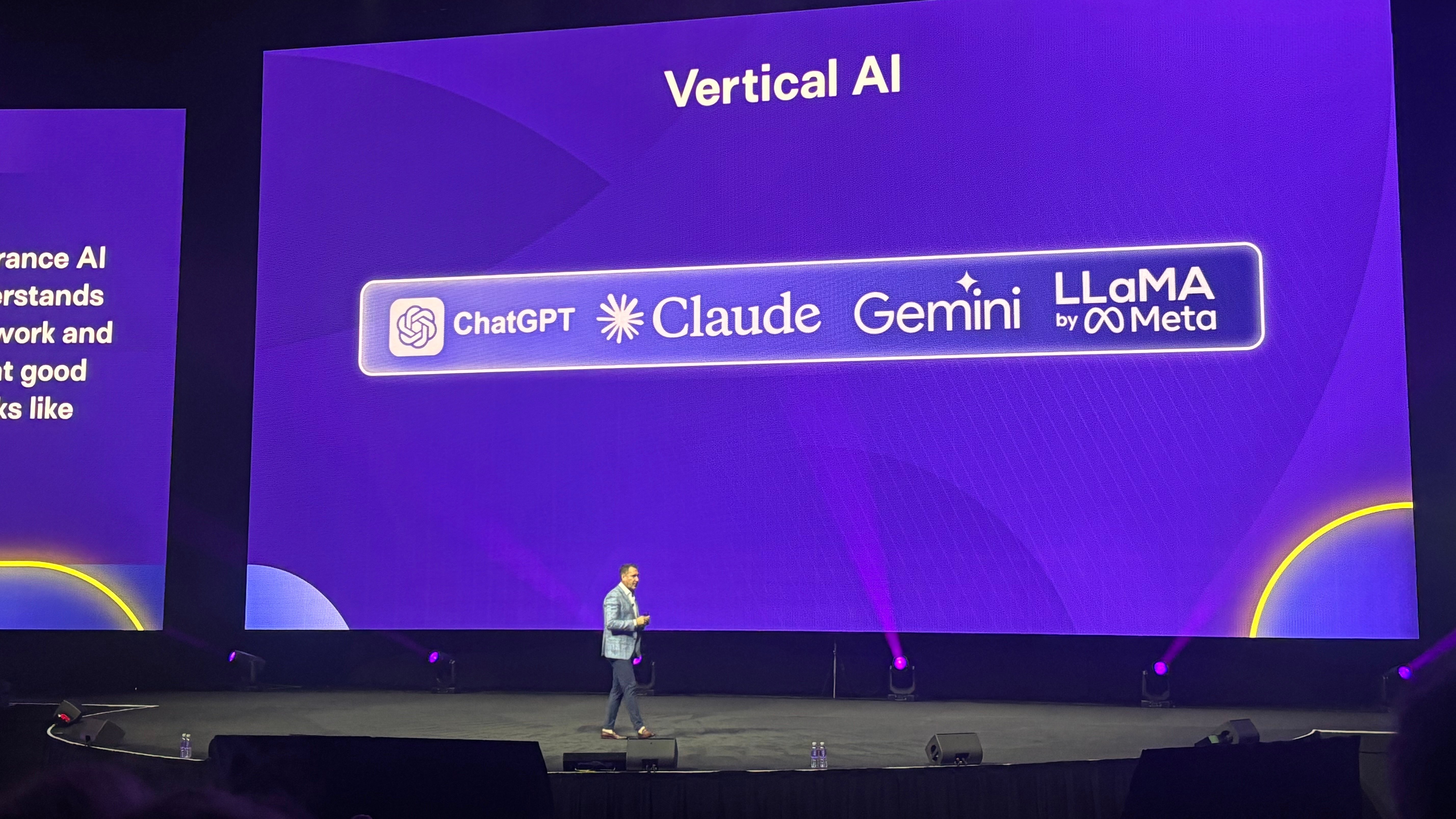
- ChatGPT, Copilot, Gemini, and Claude
What changed is accessibility. AI is no longer limited to large companies or technical teams. Today, agency owners, producers, account managers, CSRs, and operations leaders can use AI through simple prompts, voice tools, and software they already have.
Types of AI Insurance Agencies Should Know
Not all AI tools do the same thing.
Generative AI creates emails, summaries, images, reports, and other content.
Voice AI listens and responds through spoken conversation, such as AI phone assistants or voice receptionists.
Predictive AI uses data to forecast outcomes, such as risk, retention, renewal trends, or client behavior.
Automation AI handles repetitive tasks through workflows, triggers, and routing.
Analytical AI identifies patterns in agency data, reports, and operational activity.
The goal is not to use every category. The goal is to identify which type of AI solves a real agency problem.
Where AI Can Help Insurance Agencies
AI is not replacing the agency. It is starting to assist with everyday work that slows teams down.
1. Client Communication
Many agencies send the same types of emails repeatedly: renewal reminders, missing information requests, follow-ups, service updates, and coverage explanations.
AI can help create a first draft, improve tone, simplify language, and make communication more consistent.
The agency still owns the relationship. AI just helps the team get started faster.
2. Call Notes and Meeting Summaries
AI transcription tools can capture conversations, summarize key points, identify action items, and speed up documentation.
This helps improve consistency and reduces the time spent manually typing notes after every meeting or client call.
3. Policy Review and Renewal Prep
AI can help summarize policy information, compare documents, identify changes, and prepare renewal talking points.
For account managers and producers, this can reduce preparation time and improve confidence before client conversations.
AI does not replace expertise. It reduces manual friction, so experienced professionals can focus on advising clients.
4. Voice AI and Chatbots
Voice AI and chatbot tools can support intake, FAQs, appointment scheduling, basic service questions, and after-hours engagement.
For agencies dealing with high service volume, these tools can help capture requests, route issues, and improve responsiveness when the team is unavailable.
5. Agency Data Insights
AI can help agencies better understand the information already inside their systems.
It can help identify:
- Retention trends
- Aging renewals
- Cross-sell opportunities
- Service bottlenecks
- Missed follow-ups
- Reporting patterns
- Workflow gaps
Sometimes the biggest AI opportunity is not adding more data. It is finally seeing the data your agency already has.
Where AI Can Go Wrong
AI can sound confident and still be wrong.
That creates risk in insurance, especially when tools are used without proper review.
Common AI risks include:
- Incorrect coverage explanations
- Hallucinated policy language
- Fake legal citations
- Over-automation
- Poor client experience
- Privacy concerns
- Security gaps
- Lack of human oversight
Be cautious when vendors promise “set it and forget it,” “100% accuracy,” “no human review needed,” or “we replace your team.”
Those are red flags.
AI can help prepare the work. It cannot replace accountability.
The Real Opportunity: Remove Friction, Not People
AI can often get a task 80% of the way there faster.
It can draft, summarize, organize, compare, research, and prepare.
But the final 20% still belongs to people.
That is where judgment, empathy, context, trust, and client relationships matter most.
No client wants a robot replacing their agent during a claim, a major loss, or a complex coverage conversation. The agencies that succeed with AI will not remove people from the process. They will remove friction from the work so their people can spend more time being human.
Four Questions to Ask Before Buying an AI Tool
Before adding an AI tool to your agency, ask these questions.
1. Does it preserve accountability?
Is there human review? Can your team approve, edit, correct, and document the output?
2. Does it create measurable value?
Will it save time, reduce errors, improve service, increase consistency, or create a better client experience?
3. Is it secure?
What data goes into the system? How is that data stored, used, and protected?
4. Will your team actually use it?
Good technology should feel useful, not just impressive. If your team does not adopt it, it will not create value.
How Insurance Agencies Should Start With AI
You do not need to transform your agency in 30 days.
Most agencies do not need 14 AI tools. They need clarity, prioritization, and a practical starting point.
Start small:
- Pick one repetitive task.
- Test one AI use case.
- Require human review.
- Measure the time saved.
- Train the team.
- Improve the process before expanding.
Technology maturity is not about how many tools you buy. It is about how intentionally you use them.
Final Thought
AI is not a fad. It is becoming foundational.
Used well, AI can help independent insurance agencies save time, improve consistency, reduce administrative work, and make better use of existing data.
Used poorly, it can create confusion, liability, and a weaker client experience.
The difference is not the tool.
The difference is the strategy behind it.
Take the Next Step
Not sure where AI fits into your agency’s technology strategy?
Start with the Catalyit Agency Tech Assessment. In about 10–15 minutes, you can map your current technology, identify gaps, compare your tech stack to industry benchmarks, and receive personalized recommendations.
Catalyit helps independent insurance agencies make smarter technology decisions without needing to become technology experts.
Take the Agency Tech Assessment and start building a clearer path forward.


No Comments Yet
Let us know what you think