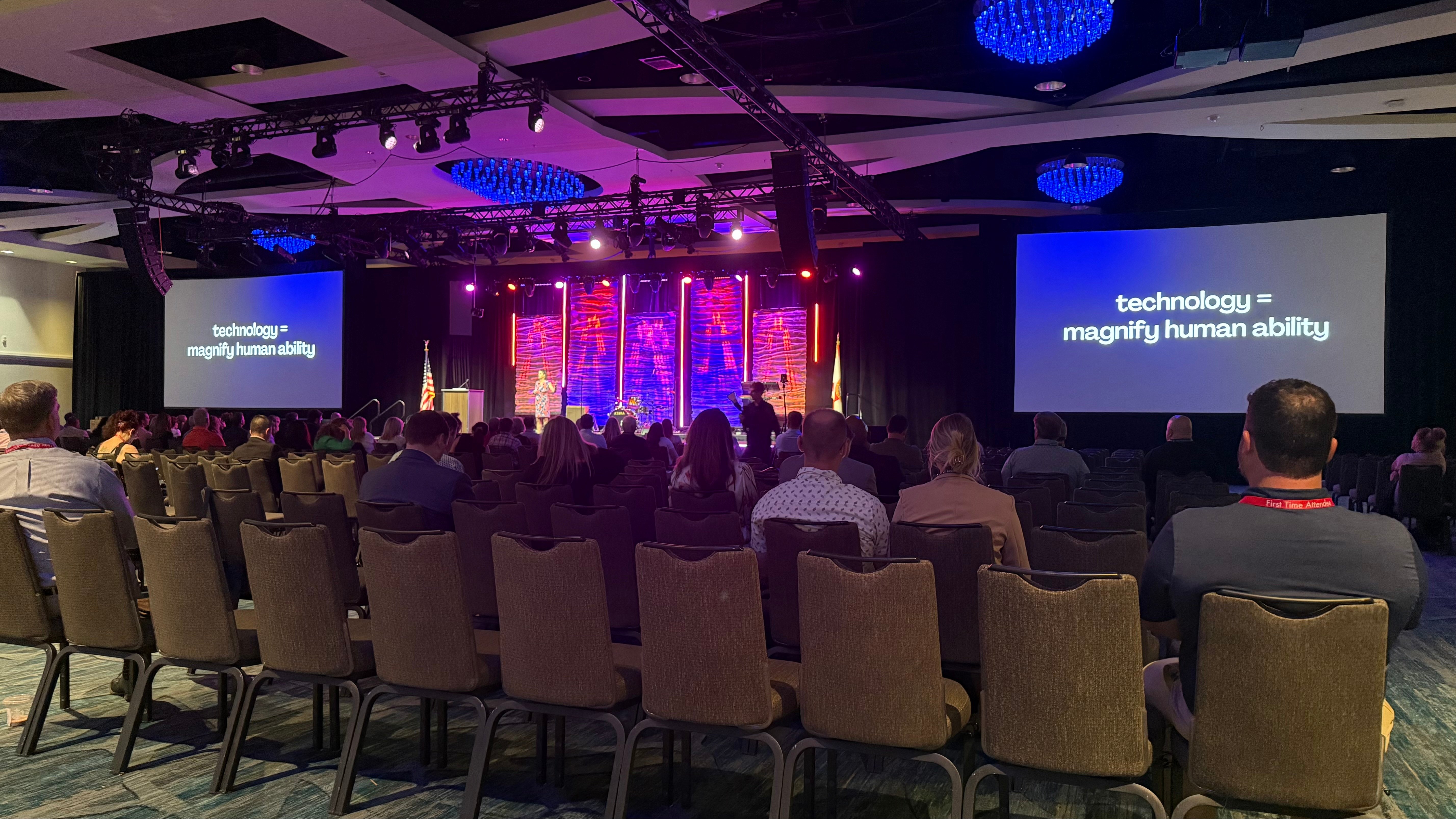
At the recent Agency Management Conference hosted by Big I Mississippi, Marit Peters, CEO of Catalyit, delivered a powerful message:
The standards you walk by are the standards you accept.
In a market defined by volatility, talent pressure, softening premiums, and accelerating technology, agency success will not be determined by tools alone. It will be defined by culture, leadership discipline, and continuous improvement.
This blog captures the key insights and how independent insurance agencies can apply them immediately.
Culture Is Not a Poster on the Wall
When Marit stepped into leadership 11 years ago, she discovered a $7 million organization projected to lose $1 million. The financial issues were symptoms. The root cause was culture.
After 90 days of listening sessions and focus groups, she made a defining decision: reset the culture or accept decline.
Three employees were exited. Every remaining team member signed a culture contract committing to:
- Continuous improvement
- Integrity in everything
- Excellent service
- Strong relationships
Everyone signed. Champagne followed. The organization never looked back.
The Leadership Lesson
Culture is not aspirational language. It is behavioral enforcement.
If someone violates a core value, leaders must address it immediately.
A simple framework Marit uses:
On one hand, you signed this agreement. On the other hand, I see behavior that contradicts it. Help me understand.
Clear. Non-accusatory. Accountable.
Why Organizational Health Beats Strategy
Many agencies obsess over growth strategy, carrier appointments, and technology. According to Patrick Lencioni, author of The Advantage, organizational health trumps everything else in business.
Healthy organizations:
- Have clarity
- Reinforce values consistently
- Address dysfunction early
- Align leadership
Unhealthy organizations:
- Avoid conflict
- Tolerate “jerk behavior”
- Drift into silos
- Accept mediocrity
When markets soften and commissions tighten, culture becomes a profit lever.
Continuous Improvement: The Competitive Edge
One of Marit’s guiding principles:
The best part about continuous improvement is you always get better.
The worst part is you never arrive.
Agencies that adopt continuous improvement outperform because they:
- Solve root causes, not symptoms
- Ask “What problem are we solving?” before launching initiatives
- Refine workflows consistently
- Encourage idea sharing
Real Agency Example
An agency added new carrier markets but saw no production lift.
Why?
Account managers kept using familiar carriers. No training. No adoption support. No desk-level clarity.
The issue was not marketing. It was execution alignment.
Continuous improvement requires discipline at the workflow level, not just strategic announcements.
Employee Engagement: The Hidden Multiplier
In The Truth About Employee Engagement, Lencioni outlines three causes of miserable jobs:
- Anonymity: Employees feel invisible
- Irrelevance: They don’t know who they impact
- Immeasurement: They don’t know what success looks like
Agency leaders can solve all three without spending a dollar.
1. Eliminate Anonymity
Do you know your employees beyond their job title?
Have you asked about their goals, stressors, or ambitions?
2. Clarify Impact
Does your CSR understand how their proposal preparation makes producers look like rock stars?
Does your accounting team understand how clean reporting supports strategic decisions?
Impact fuels engagement.
3. Define Success
Producers measure revenue. Easy.
But what about:
- Account managers?
- Service teams?
- Admin staff?
Success may be:
- Client thank-you messages
- Reduced endorsement cycle time
- Clean documentation scores
- Fewer rework requests
Clarity reduces burnout.
The Splitters vs. The Blenders
Post-COVID, leadership requires nuance.
Marit shared a helpful distinction:
- Splitters: Work is separate from life. Clear boundaries.
- Blenders: Work and life intertwine fluidly.
High performers exist in both groups.
The goal is not equal treatment. It’s equitable support.
Flexibility should reflect outcomes and fairness, not identical schedules.
The 85% Rule: Why People Skills Win
A powerful statistic shared:
Only 15% of financial success is tied to technical skills.
85% is driven by people skills.
In insurance, that means:
- Emotional intelligence
- Conflict management
- Listening skills
- Coaching ability
- Relationship depth
Technology can increase efficiency.
Only humans create loyalty.
The Abundance Mindset
Agencies often operate from scarcity:
- Limited talent
- Limited premium growth
- Limited opportunity
But independent agents gather at conferences, even with competitors, because they understand abundance.
There is enough opportunity for agencies that:
- Differentiate through service
- Build strong teams
- Commit to improvement
- Adapt with technology
Scarcity thinking leads to risk aversion.
Abundance thinking fuels innovation.
Practical Next Steps for Agency Leaders
If you implement nothing else from this session, do these three things:
1. Audit Your Culture
- Are core values written?
- Are they enforced?
- Are breaches addressed consistently?
2. Define Success for Every Role
Ask each team member:
- How do you know if you’ve had a great day?
- What metrics matter?
- Who do you impact?
3. Pick One Improvement
Inspired by Atomic Habits: improve 1% daily.
That could mean:
- One workflow review
- One difficult conversation
- One book club launch
- One clarity conversation
Over time, 1% compounds into transformation.
Why This Matters Now
We are navigating:
- A softening market
- Compensation compression
- Technology acceleration
- AI integration
- Rising talent costs
Agencies that treat culture as strategy, not HR fluff, will outperform.
At Catalyit, we believe agency success is built on:
The agencies that win the next decade will be the ones that:
- Protect their standards
- Invest in their people
- Embrace improvement
- Stay human in a digital world
Final Thought
Your character is your destiny.
For agencies, culture is character.
The standards you walk by today will determine where your agency stands tomorrow.




No Comments Yet
Let us know what you think